One of the more beautiful anchorages along the ICW that we’ve found, albeit a little tricky entrance.
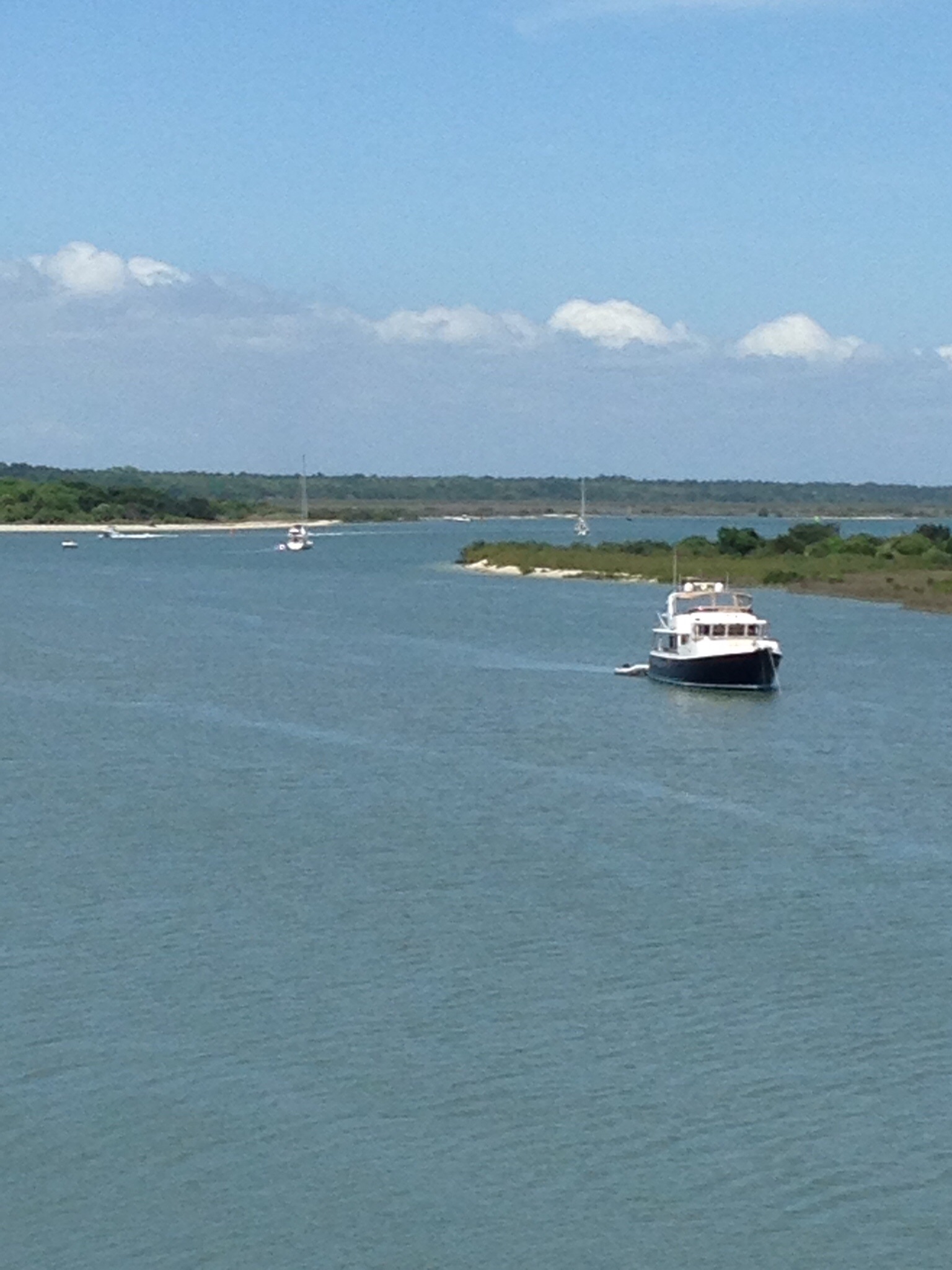
Looking northwest over Matanzas Inlet anchorage and the ICW in background
We we tried coming here on the trek south, but the decided to bypass it after attempting the described channel to only find decreasing water depths. The entrance, along with the ICW, has ever-changing depths due to it being an ocean inlet (while there are several boats anchored here with us, we have watched a few try, only to keep going). There is actually one boat hard aground now as they took the entrance too far south.
The ICW channel can be a little disconcerting as it precariously hugs the western shoreline. The navigational literature is also incorrect about where the entrance lies, which is along the north shore.
This time, with renewed confidence, we successfully entered the anchorage. Not only is the entrance hazardous, the current runs very swift, and we now find ourselves back in the land of tides and currents and wind. Having been Chesapeake Bay boaters, anchoring into the current versus the wind does not come easy. It’s easy to do it, just does not come natural to us.
It is well worth the effort, and we have ended up spending two nights here.
Being so close to the inlet, the sound of ocean waves lull you to sleep. Dolphins join you for your morning coffee. The inlet beaches are beautiful.
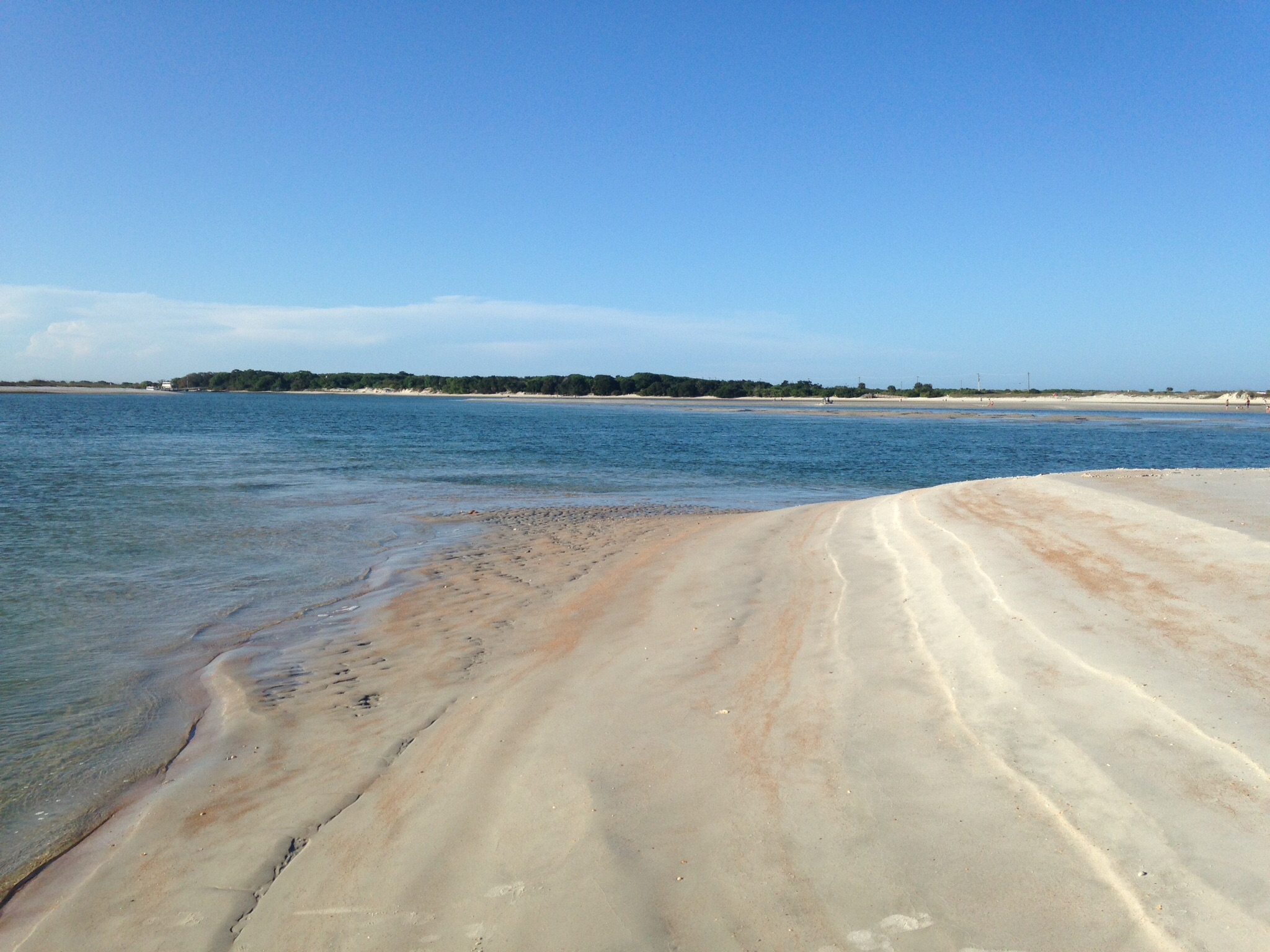
Inlet beach at Matanzas Inlet
There is about a three foot tide here, however the anchorage is deep. Further in, east of the watchtower, a shoal on the south shore provides some playtime for the four-legged crew at low tide. He jumped from the dinghy, sniffed and ran, even swam, and only left his paw prints in the sand.

Woo Hoo!

Hmmm … Never seen one of these before

A little water on my paws is not so bad.
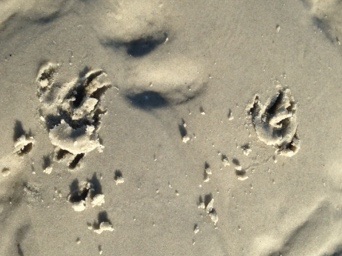
King Charles Paw Prints 🙂
For such a beautiful place, the name, Matanzas, has a not so pleasant heritage though. It means “killings” in Spanish, and evolved during the New World conquest between Spain and France in which the Spanish massacred a contingent of already surrendered French soldiers at the now named Matanzas Inlet.
The Spanish then built a watchtower, now called Fort Matanzas to protect their territory. The fort still stands today. Over 300 years old, it took 2 years to construct, but was successful at deterring backdoor attacks to Spain’s establishment at St. Augustine.

Fort Matanzas, Florida
The fort stands as a backdrop to the anchorage.
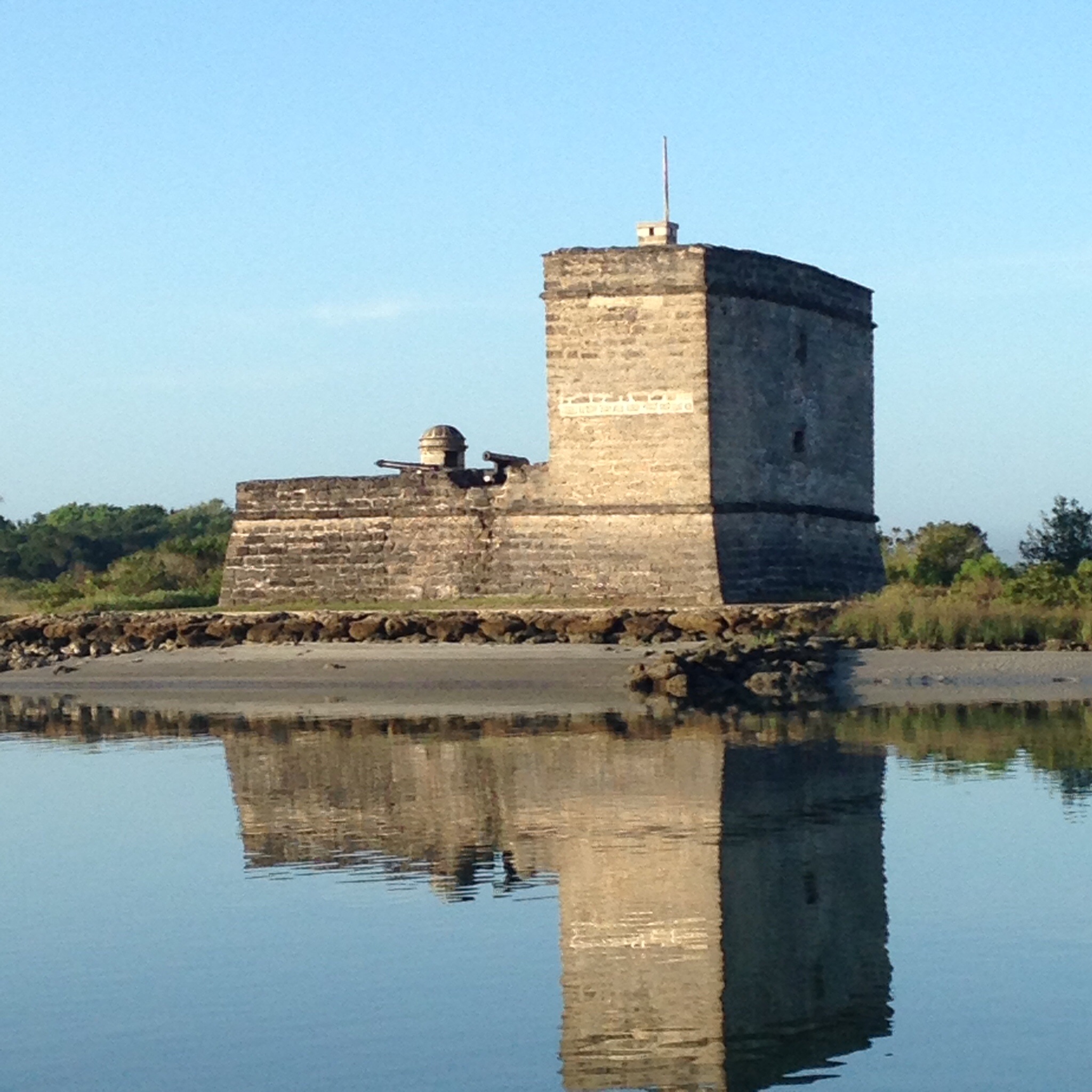
Fort Matanzas, Florida
And, still flies the flag denoting its heritage.

Spanish cross flag designating the fort as Spanish territory
We are onward to St. Augustine tomorrow for a few days where we hope to rendezvous with other cruisers as we all make our migration north.
We had to forego our thought to visit the Kennedy Space Center as there is not great access without renting a car, and the logistics of the dog were not attractive. Howard has already been there, so maybe next time for me. Not to mention, the scheduled launch was delayed.
 S/V Dreamer